
21-Year-Old Water Heater Fails: A Bellingham Water Damage Lesson
November 3 · Gavin GreenWater Damage
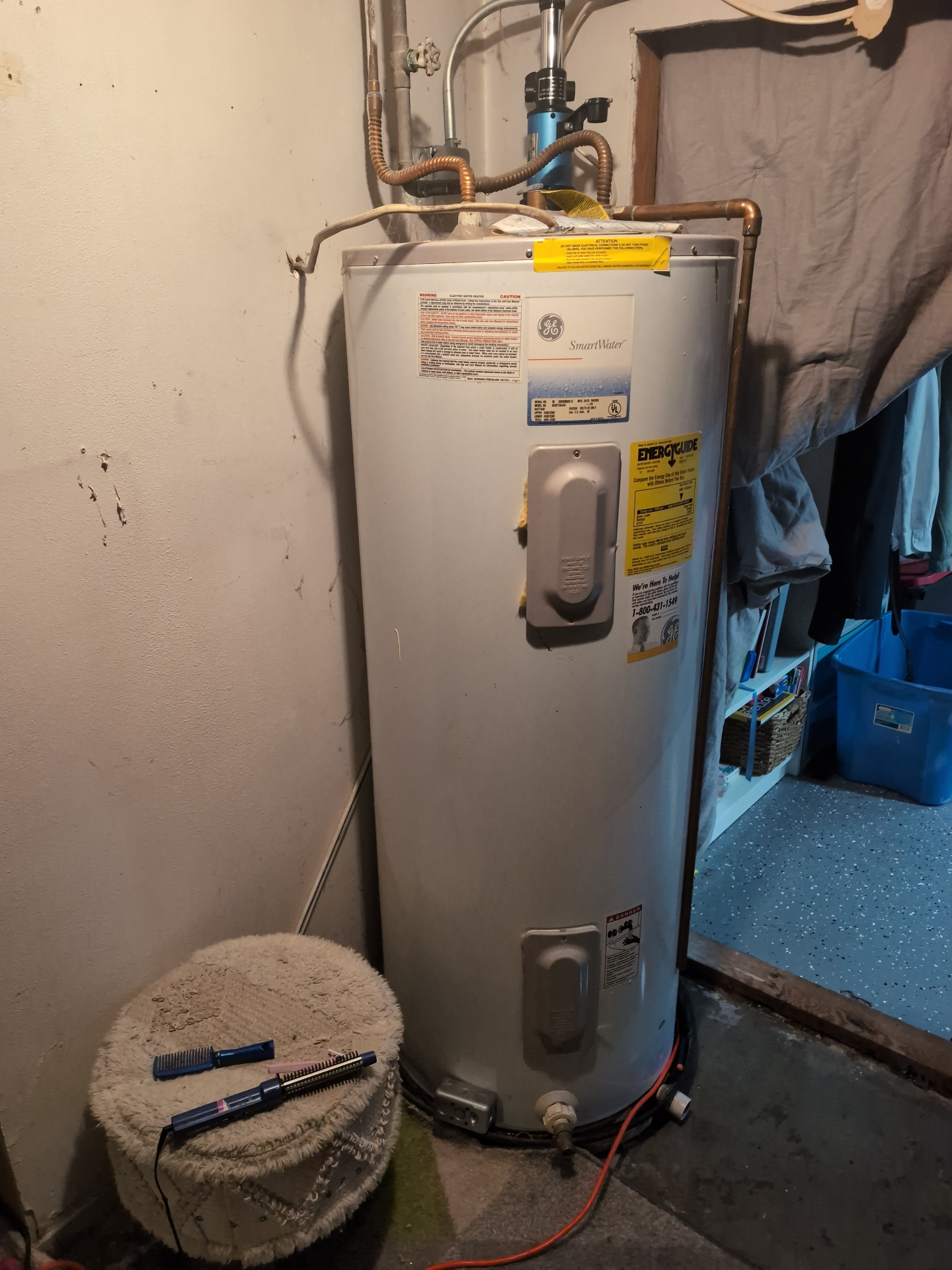
Quick take: A water heater failed in a Bellingham home recently. Not a ten-year-old tank that had earned its retirement — a twenty-one-year-old GE electric unit that kept going long after it should have been replaced. When it finally let go, it made a mess. Here's the thing about water heaters: they don't warn you, they don't wait for a convenient day, and when they go, they go all at once. But with a little planning ahead, you can save yourself a big headache.
How to tell how old your water heater is
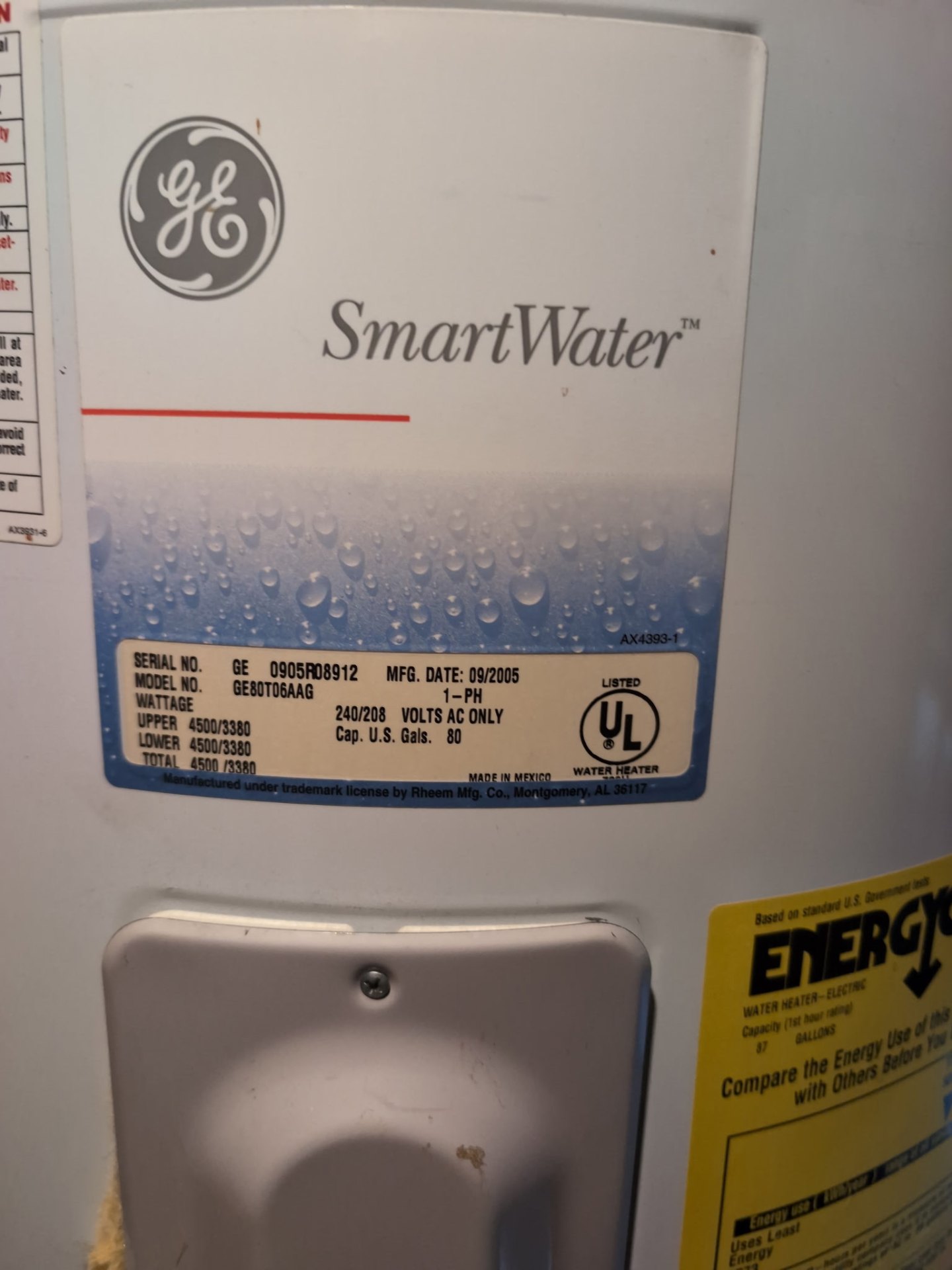
You don't have to guess. Every tank has a rating plate on the side, and the manufacture date is right on it. On this GE SmartWater 80-gallon electric heater, the label reads MFG. DATE: 09/2005 — plain as day. Some brands don't spell it out and hide the date inside the serial number instead; on most, the first four digits give you the month and year it rolled off the line.
Look yours up today. Most water heaters are built to last 8 to 12 years. If yours is past ten, you're in bonus territory — start budgeting for a replacement instead of waiting for the tank to make that decision for you, usually at two in the morning or right before a holiday.
Catch the leak before it becomes a flood
Water heaters rarely burst without notice — they drip first. A ten-dollar moisture detector, the kind you set in the pan or on the floor next to the tank, will chirp the moment water shows up. That matters a lot when your heater lives in a garage, closet, or utility room you don't walk through every day, because a slow leak can hide for weeks before someone notices the carpet is wet.
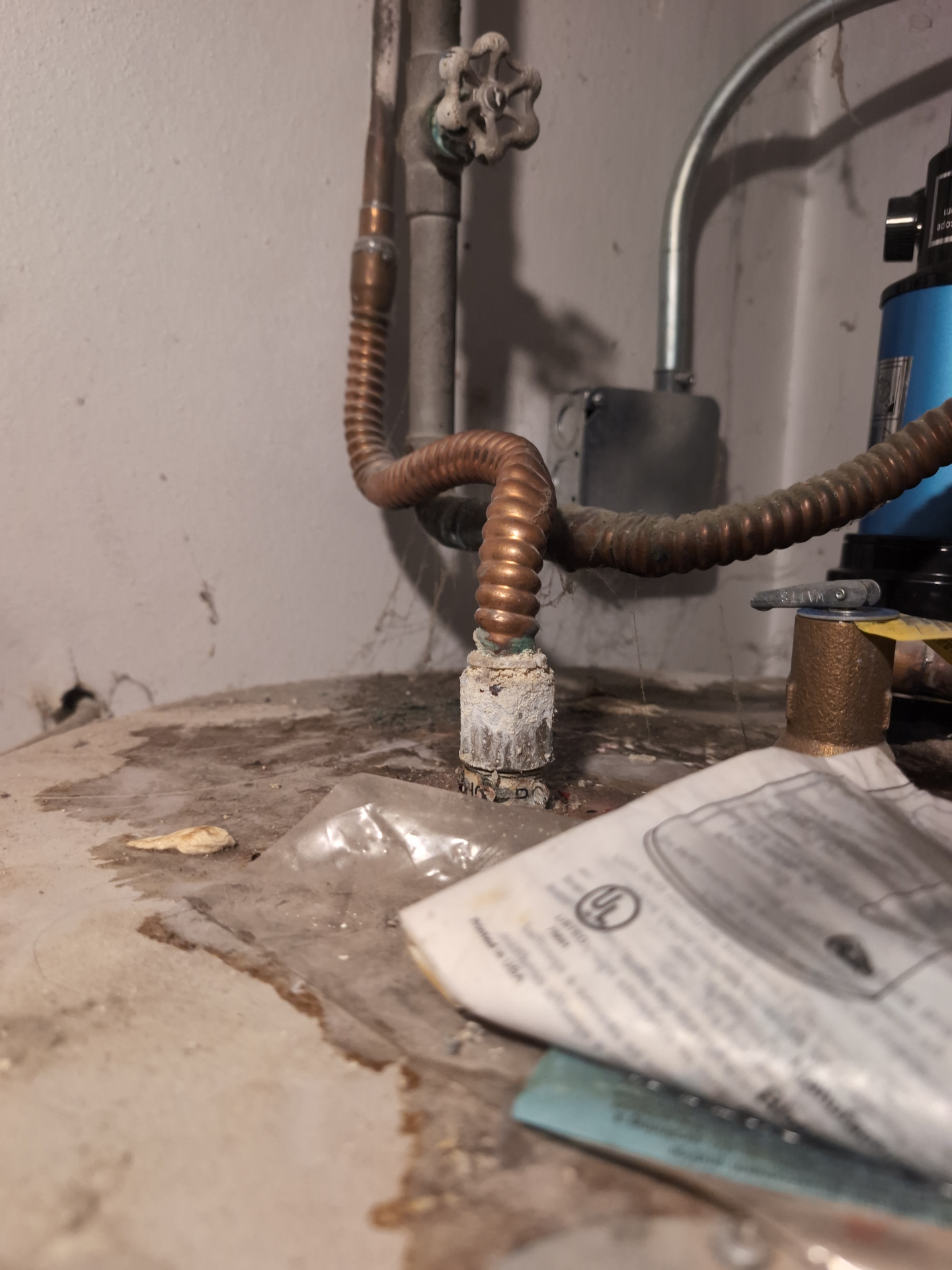
While you're down there, look for the early signs: rust streaks running down the side of the tank, water or crusty mineral buildup around the fittings on top, damp spots at the base. The fitting in the photo below is what a failing connection looks like up close — corrosion and scale building up until it can't hold back the water anymore.
Know how to turn off your water
The difference between a nuisance and a disaster is usually just a few minutes, and knowing where your main water shutoff is. Every adult in the house should be able to find it and close it — in most Whatcom County homes it's where the water line enters the house, and it takes one firm turn to stop the flow. There's also a shutoff on the cold water pipe right at the top of the heater, so you can isolate the tank without shutting water off to the whole house.
If water is coming out of the heater and you can't stop it at the tank, shut off the main and call us. Faster you stop the water, smaller the mess.
When it does fail, that's our job
Sometimes a failed water heater makes a big mess — water travels, soaks into carpet, wicks up baseboards and drywall, and keeps moving until it's stopped and dried. The good news is the same lesson this job taught: plan ahead. Know your tank's age, keep a moisture detector nearby, and know where your shutoff is. And if one lets go anyway, we extract the water, get the area drying, and take moisture readings along the way so the structure is truly dry — not just dry-looking — with no surprises down the road.
Dealing with water where it shouldn't be? Visit our water damage restoration page or call or text (360) 927-1255 — day or night, we'll get you dried out.
#Bellingham#water damage#restoration#home maintenance#Whatcom County
Water emergency? Call now.
Flood, leak or wet carpet — call for emergency extraction and dry-out.
More from the blog
- Downtown Bellingham Apartment Leak: Two Units Dried in 3 Days
October 20
A second-floor fresh water leak near downtown Bellingham soaked two apartments. See how we dried both in 3 days and proved the wood dry with a meter.
- Carpet Cleaning in Bellingham: Honey & Palmer on Inspection Duty
October 23 · Carpet Cleaning
Meet Honey and Palmer, two curious dogs watching our carpet steam cleaning wand at work in Bellingham's Alabama neighborhood. Pet-safe cleaning, dry in 4–6 hour…
- WWU Student Rental Turnover Carpet Cleaning in Bellingham (Time-Lapse)
October 14
Watch a living room time-lapse from a WWU student rental turnover carpet cleaning in Bellingham, WA. Deep steam cleaning, dry in 4–6 hours. Book your turnover o…
- 2017 Whatcom Home and Garden Show
March 7 · Business and Marketing, Carpet Cleaning
This was our first year at the Whatcom Home and Garden Show, really our first show of any kind. We have advertised in many different ways over the years, b